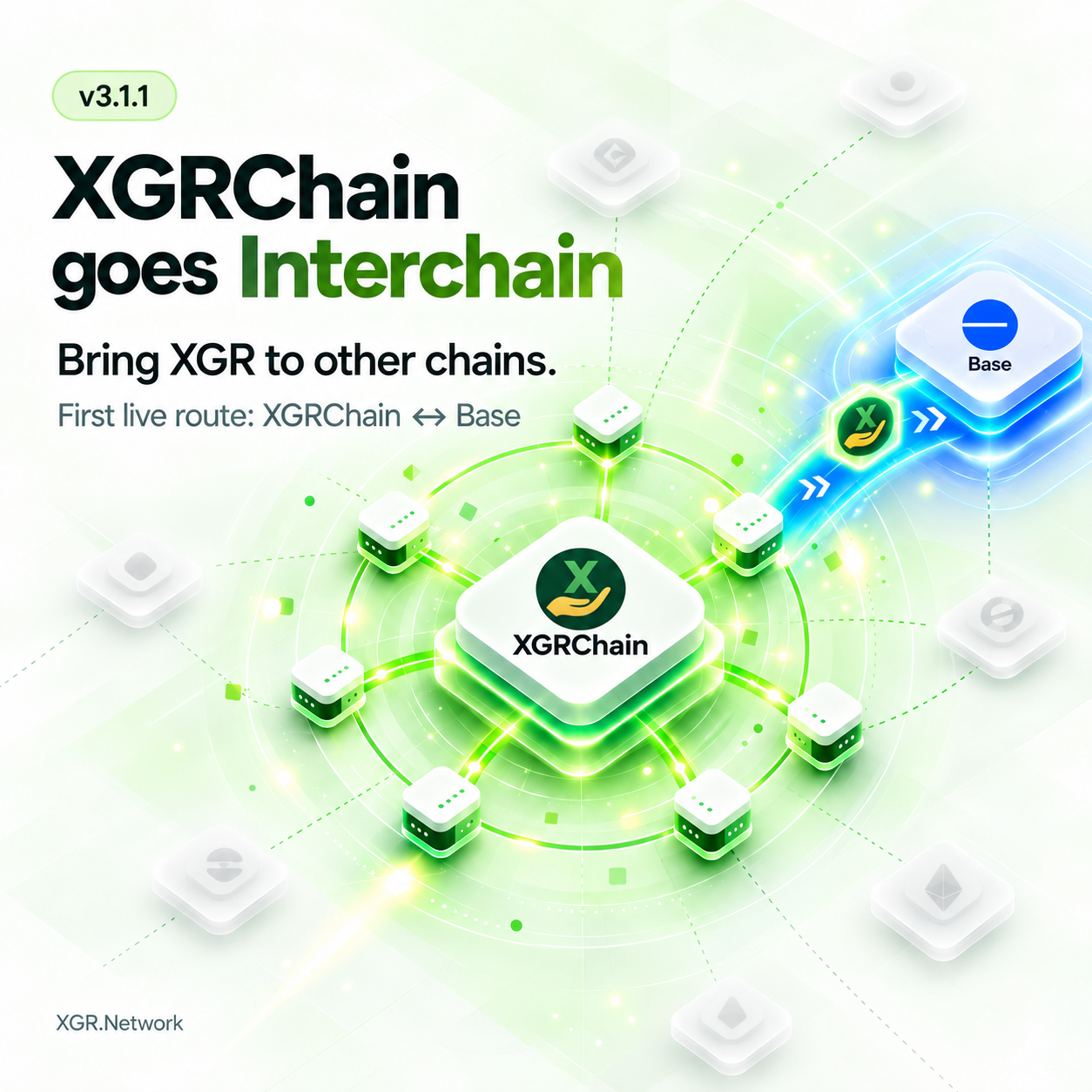
XGRChain v3.1.1 marks the start of a new phase for the XGR ecosystem: XGRChain goes Interchain.
With this release, Interchain verification becomes a native part of the XGRChain infrastructure. The first production route is already live between XGRChain and Base, allowing native XGR to move to Base as wXGR and return to XGRChain.
Both directions have been deployed and validated end to end on mainnet. The public route is available through the XGR Bridge.
More than another bridge
The visible bridge is only the user-facing part of the system.
The larger step is the architecture behind it. XGRChain v3.1.1 brings the critical Interchain verification layer into the chain infrastructure itself rather than treating security as something delegated to a bridge operator or relayer.
The relayer transports the information required to complete a transfer, but it is not the trust anchor for the transfer. It cannot simply declare a cross-chain message valid on its own.
For XGR, that distinction matters. The goal is not only to connect one chain to another, but to create a foundation that can extend XGR across multiple networks while keeping XGR-native security at the core.
The first live route: XGRChain ↔ Base
The first production route connects XGRChain with Base.
When XGR moves from XGRChain to Base:
- native XGR is locked on XGRChain
- the corresponding amount of wXGR is minted on Base
When the asset returns:
- wXGR is burned on Base
- the corresponding native XGR is unlocked on XGRChain
This creates a two-way route between the native asset on XGRChain and its representation on Base without changing the supply relationship between the two sides.
The forward and reverse paths have both been validated on mainnet.
Chain-native Interchain security
XGRChain v3.1.1 adds native Interchain verification capabilities at the execution layer and exposes the attestation state needed by the Interchain infrastructure.
The deeper cryptographic mechanisms remain largely invisible to normal users. What matters at product level is simpler: the security decision is anchored in XGRChain itself, while the relayer remains a transport component.
Interchain validation is deliberately separated from XGRChain's block-production consensus. A remote-chain outage, unavailable relayer or destination-side problem must not stop XGRChain from producing blocks, finalizing transactions or synchronizing normally.
That separation lets XGRChain remain an independent Layer 1 while adding secure connectivity to external networks.
Base is the first route — not the architecture limit
Base is the first production destination, but the architecture is designed for additional EVM-compatible networks.
That does not mean other chains are automatically live.
Every additional route must be deployed, configured and validated independently, including its destination contracts, validator configuration, message path and operational checks.
This keeps expansion explicit and controlled: the Interchain layer can grow beyond Base without pretending that a supported architecture is the same thing as a production-ready route.
What this changes for the XGR ecosystem
Until now, native XGR primarily lived inside its own Layer-1 environment.
The Interchain architecture creates a path for XGR to become available in additional ecosystems without giving up the security model at the center of XGRChain.
That opens the door to broader utility over time: wallets, applications, liquidity venues and other EVM ecosystems can interact with representations of XGR while the native asset remains anchored on XGRChain.
The first step is now live with Base.
XGRChain v3.1.1
The public XGRChain v3.1.1 node release was published on 3 October 2026.
Together with the first production Interchain route, it establishes the protocol foundation for the next stage of the XGR ecosystem:
XGRChain → Interchain.
The public bridge is available at bridge.xgr.network. Technical architecture and security details are available in the XGR Interchain documentation.